
Searching the Catoosa County Court Docket
County-level Superior and State Court searches start with the clerk's Tyler CM Web Search. This Catoosa County docket search runs by party, by associated party, or by case number. Keep one caution in mind. The results form an index, not the whole electronic or paper file behind a case. Begin with whatever court is printed on your citation, pleading, or notice. A city citation may belong to Ringgold or Fort Oglethorpe Municipal Court. Those cases never surface in the county trial-court index.
Collect a few things first. You want the party's legal name, a rough filing year, and the case number if you have it. Tyler lets you trim a name search by court, division, status, and filing-date range. Case-number searching works best when the parts stay separate: year, court code, then sequence. When a record carries codes, ST means State Court and SU means Superior Court.
- Open Tyler CM Web Search and choose the party, associated-party, or case-number route.
- Select State or Superior Court and the relevant civil or criminal division.
- Enter the narrowest reliable facts, then widen spelling and date filters if no result appears.
- Compare the case number, parties, status, filing date, and events with the known matter.
- Confirm a setting through the calendar or clerk, and request a certified document when proof is required.
Catoosa Tyler Search Fields
Small, careful queries beat sprawling ones on the Tyler forms. Party search gives you last and first names, party type, and court. Division, case status, and a filing-date range are there too. Try the associated-party option when someone is tied to a case in a different role. Case-number search is the cleanest route once the year and court code are in hand. Two traps await. Stacking too many filters can bury a real match. A broad common-name sweep can bury you in unrelated Catoosa County records.
| Search route | Best input | Useful limit |
|---|---|---|
| Party | Last name and first name | Court, division, status, filing range |
| Associated party | Name tied to the matter | Court and date range |
| Case number | Year, ST or SU, sequence | Exact court code |
The official party-search screen lays out the local fields plainly. Its terms carry a warning. Results are informational only. Confirm any doubtful identity or current status with the Catoosa County Clerk of Superior and State Courts.
Inside a Catoosa County Court Docket
Think of a Catoosa County docket as two things stitched together. One part is case identity. The other is a running list of court events. The register may list the case number, style, parties, attorneys, and assigned judge. Filing date, status, charges or claims, event dates, and disposition may appear too. A calendar goes further. It adds the setting type, the time, and sometimes a courtroom or division. Each field does its own work. A charge is only an allegation. A setting is a scheduled court event. A disposition states how a matter or count was resolved.
| Case number | Local identifier with a year, court code such as ST or SU, and sequence. |
|---|---|
| Parties | The named people or organizations and their roles in the action. |
| Entries and filings | A dated event list for pleadings, motions, notices, orders, and other activity. |
| Hearing settings | The scheduled event, date, time, and location when published. |
| Court and judge | The court level and judicial assignment tied to the case. |
| Disposition | The recorded outcome, which may apply to a count, claim, or full case. |
An index entry is not proof that every document sits online. Read down the event list and spot the filing you need. Then ask the clerk for the document itself. Some material stays out of public view. Sealed pages, protected identifiers, and certain restricted case types never appear in a public result.
Catoosa Docket Terms in Context
Short labels pack local calendars because the courts juggle many matters at once. So read every label against the case events surrounding it. A calendar call may simply organize cases for later action, and it is not always a trial. A reset shifts a setting without dismissing anything. An order is the court's written direction. A judgment records a civil decision.
- Arraignment
- A criminal setting where the charge is stated and a plea may be entered.
- Calendar call
- A session used to check readiness, status, or scheduling for several cases.
- Continuance
- A court-approved move of a hearing or trial to a later date.
- Disposition
- The recorded result of a claim, charge, or case.
When you ask the clerk about a setting, quote the label exactly. Turning a “calendar call” into a “trial” invents a result the Catoosa County court docket never announced.
Courts That Keep Dockets in Catoosa County
Catoosa County belongs to Georgia's Lookout Mountain Judicial Circuit. Superior Court keeps the general-jurisdiction records, felonies and major civil matters among them. State Court takes misdemeanors, county traffic matters, and civil cases within its authority. Magistrate Court handles warrants, small claims, dispossessory matters, and other limited work. Probate Court maintains its own estate, guardianship, marriage, and weapons-license records. Juvenile Court records face special limits. Ringgold and Fort Oglethorpe each keep separate municipal matters.
| Court | Docket Covers | Where to Search |
|---|---|---|
| Superior Court | Felony, major civil, domestic, title, and equitable matters | Tyler index, LMJC calendars, Superior Court clerk |
| State Court | Misdemeanor, county traffic, and civil matters | Tyler index, calendars, State Court clerk |
| Magistrate Court | Small claims up to $15,000, dispossessory, warrants | Magistrate Court and its civil filing route |
| Probate Court | Estate, guardianship, marriage, and license records | Probate clerk and Georgia Probate Records |
| Municipal courts | City traffic, ordinance, and specified misdemeanor matters | Ringgold or Fort Oglethorpe court |
One County, Several Record Systems
No single Georgia search gathers every Catoosa County case and document under one roof. The county Tyler system opens the State and Superior Court index. PeachCourt serves as Georgia's e-filing and document-access route for participating courts, though it may demand an account and never replaces the local public index. Georgia Probate Records belongs to an entirely different court and record set. Municipal calendars stay with each city. The state's E-Access court-record directory helps you locate a court's approved service, and the manifest image from that directory shows how statewide routing works:
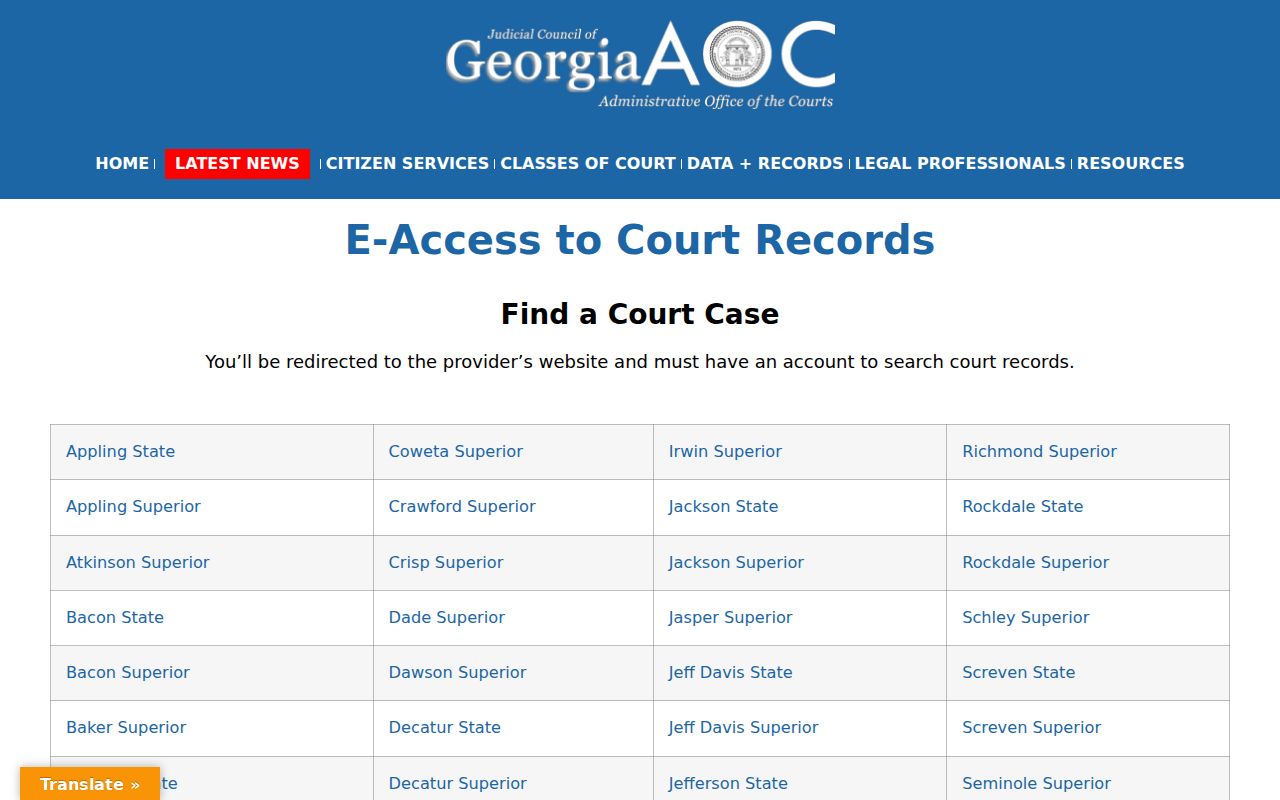
The directory points outward. It never merges the separate Catoosa County, probate, municipal, and federal records into one file.
How to Find Court Dates and Settings
Catoosa County releases calendar information in layers. The county court-calendar page embeds one broad Google calendar. The Lookout Mountain Judicial Circuit Catoosa page posts court-specific PDF lists and calendars. A docket entry may show the current setting tied to a single case. Check all three whenever timing matters. A broad calendar can lack a division list's detail. A downloaded PDF can also be superseded.
One more caution belongs here. A setting is a scheduled event. It is not a promise that a final hearing or trial will happen. Continuances, cancellations, and resets can move the date. The Catoosa County court calendar walks through the layers and the safest confirmation steps. If a mailed notice and the online calendar disagree, call the assigned clerk. Bring the case number and quote the setting label word for word.
Catoosa Calendar PDFs Need Confirmation
LMJC posts criminal, civil, arraignment, plea, jury, and other working calendars. Those lists earn their keep because they preserve local setting terms and division context. They also expire quickly. The circuit's Short List material tells users to confirm settings, and an operational notice can shift a program date without ever touching a Tyler search form. The source capture on the LMJC Catoosa court page shows where the county-specific lists live:
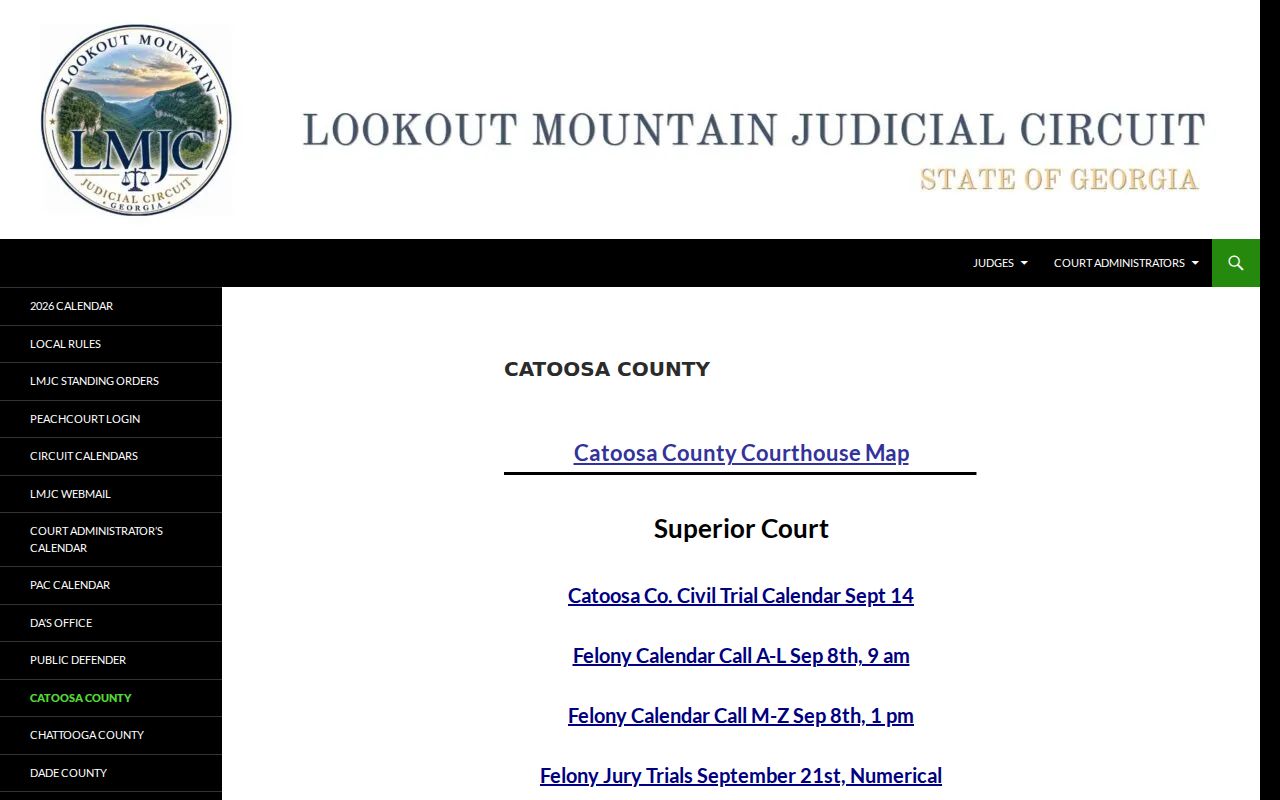
Treat a PDF as a strong lead. Before you travel, weigh it against a later posting, the case docket, and the clerk's current information.
Catoosa Filing and Search Tools Differ
Searching, filing, and ordering a certified copy are three different jobs. For Catoosa County State and Superior cases, Tyler serves as the public index. PeachCourt handles e-filing and other account-based document functions for participating Georgia courts. When the clerk offers the document electronically, the GSCCCA eCertification system delivers certified electronic records. Just need a court date? Skip the e-filing account entirely.
| Need | Likely route | What to verify |
|---|---|---|
| Find a case | Tyler CM Web Search | Court, party, number, and status |
| File in a case | PeachCourt or the proper clerk | Court participation and filing rules |
| Certified copy | Clerk or eCertification | Document, fee, and delivery format |
Georgia's court management system project describes statewide technology work, but participation is opt-in and records stay separated by court. So don't assume every Catoosa record has already moved to a new platform.
Public Access to Court Dockets
Georgia courts recognize a public right to inspect many court records, though access has limits. The state's Open Records Act governs many agency records. Court files also answer to court rules, sealing orders, and privacy protections. A public docket can omit a sealed case or restrict a protected filing. Juvenile material, grand-jury matters, adoption records, and personal identifiers all call for special care. And a blank online search never proves no record exists. A docket search returns nothing, and that simply is not a ruling on whether a file exists.
Key Rules:
O.C.G.A. § 50-18-71 sets procedures for inspecting and copying public records held by covered agencies.
Uniform Superior Court Rule 21 governs access to court records and motions to limit access.
Uniform Superior Court Rule 36.17 addresses protection of sensitive identifiers in filings.
When Catoosa Search Returns Nothing
Start by removing optional filters and trying spelling variants. Then confirm the court. A probate, Magistrate, Juvenile, municipal, or federal case may sit outside Tyler's State and Superior coverage. Recent activity can lag behind, and an older file may call for a clerk search; restricted or sealed access can also explain a blank result.
Fallback chain: retry the official index, check the correct court's calendar or portal, call the responsible clerk, then submit a focused written request for an identifiable record.
For a federal filing tied to Catoosa County, use PACER and the Northern District of Georgia's Rome Division rather than any county portal. The bankruptcy court's Rome location page reflects that separate federal channel.
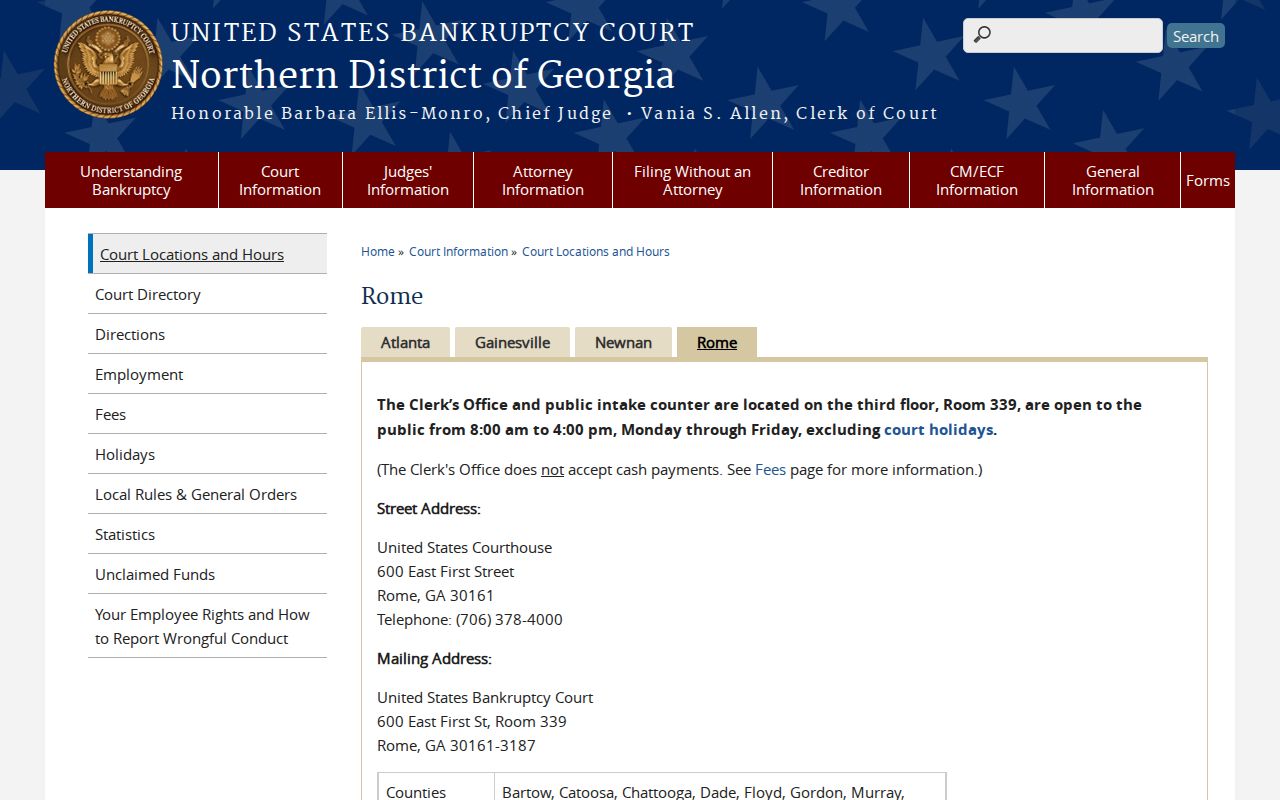
Federal searches carry their own accounts and fees. A county case number will not turn the federal system into a county docket search.
Docket Records at the Clerk's Office
The Catoosa County Clerk of Superior and State Courts keeps the records for two trial courts. Those courts are the Superior and State courts. Staff can help identify an older file, explain copy formats, and issue certified records. Requests go smoothest with the court, case number, party names, approximate year, and exact document. A phone call can confirm the process, but it is not itself a certified record.
Catoosa Clerk of Superior and State Courts
875 Lafayette Street
Ringgold, GA 30736
706-935-4231
There is no single copy fee for every record. Ask the clerk for an estimate and the accepted payment method before sending funds. For supported electronic certification, the GSCCCA eCertification portal is the official online route.
Historic and Active Catoosa Courthouses
Catoosa County has two courthouse landmarks, which can confuse a first visit. The historic 1939 courthouse stands at 7694 Nashville Street. Active court and clerk functions run from the county courthouse at 875 Lafayette Street. A historic-place listing proves nothing about today's layout. It does not tell you where a hearing, records counter, or filing desk sits. Confirm your location on the hearing notice or with the clerk. Court-specific instructions control security, room assignments, and arrival times. The distinction matters most when an older photo or local-history result outranks current county court information. Georgia's broader court technology project page shows the same statewide pattern.
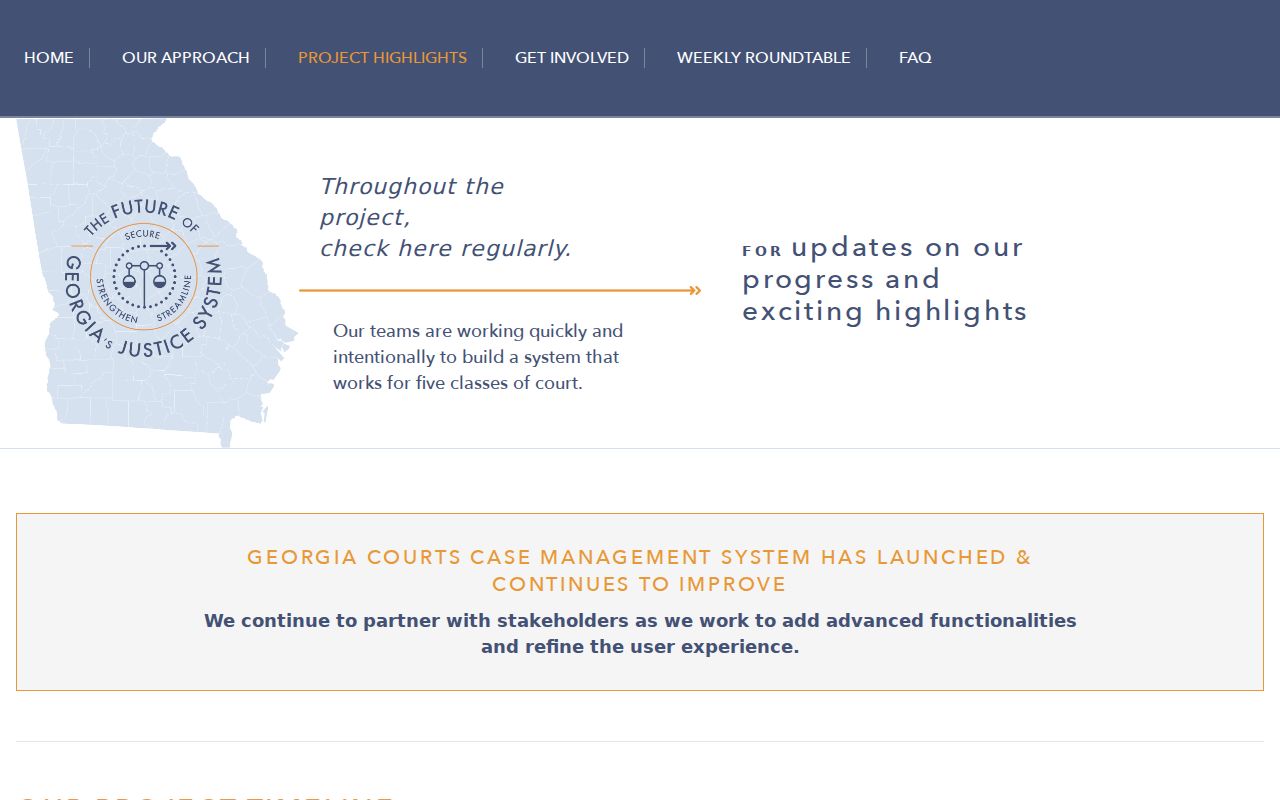
Technology changes the access routes, but the official record still belongs to the originating Catoosa court and clerk.
Catoosa County Court Dockets by City
Catoosa County has two incorporated cities. Their municipal courts handle city traffic and ordinance matters. They also take specified misdemeanors. Those cases sit apart from the county's State and Superior Court dockets. Fort Oglethorpe offers a searchable Courtware table plus city payment routes. Ringgold posts recurring municipal sessions and points record and payment questions to its clerk. Read the issuing court on the citation before picking a portal.
Fort Oglethorpe Docket Search
2020 population 10,423 · Courtware calendar and GovernmentWindow payment access
Ringgold Docket Search
2020 population 3,414 · Clerk access and first- and third-Monday sessions
Fort Oglethorpe's table can show court date, case number, ticket number, violation details, and a required-appearance indicator. Ringgold publishes no comparable case-by-case table. That difference is exactly why each city gets its own access instructions instead of a copied county search process.
Map and Directions to the Catoosa County Courthouse
Superior, State, and Probate Court records are kept at the Catoosa County Courthouse, 875 Lafayette Street, in Ringgold. Superior handles felony and major civil matters and exclusive divorce jurisdiction, while State Court handles misdemeanors, traffic, and civil matters not reserved to Superior; both share the same clerk's office at this address. Magistrate Court sits a block over at 877 Lafayette Street, and 800 Lafayette Street is the separate county administration building, not a court records counter.
Catoosa County Courthouse
875 Lafayette Street
Ringgold, GA 30736
706-935-4231
Monday through Friday, 8:00 a.m. to 5:00 p.m., closed noon to 1:00 p.m.
No official source confirms a public self-service terminal, records-room floor, or parking arrangement at this courthouse, so calling ahead is the safer plan. Do not confuse this active address with the 1939 historic courthouse at 7694 Nashville Street, which is a local-history landmark rather than a current docket-access point.